A Comprehensive Overview to the Techniques Made Use Of in Aluminum Foundry Operations
Aluminum Foundry operations utilize various casting techniques, each with unique processes and applications. Comprehending these approaches is essential for optimizing manufacturing and achieving desired material residential properties. From sand spreading to pass away spreading, the choices offered can significantly influence performance and cost. As technology advancements, so also do these techniques, triggering a better exam of their benefits and limitations. The ramifications of these advancements necessitate additional expedition.
Summary of Aluminum Casting Techniques
Aluminum spreading methods include a variety of approaches made use of to shape liquified Aluminum into wanted kinds. These methods are essential in the manufacturing and design industries, supplying adaptability and effectiveness. Major techniques include die spreading, which employs high-pressure to inject Aluminum into molds for accuracy parts, and gravity casting, where molten Aluminum is poured right into mold and mildews under the influence of gravity, permitting larger, much less complex forms. Financial investment spreading, one more approach, entails producing a wax pattern covered in ceramic, supplying high dimensional precision for intricate designs. Furthermore, permanent mold casting makes use of multiple-use molds, enhancing manufacturing performance and lowering waste. Each method accommodates specific applications, stabilizing elements such as expense, production volume, and product residential or commercial properties. As markets evolve, developments in these casting techniques proceed to enhance the top quality and performance of Aluminum elements, positioning them as vital processes within modern-day manufacturing.
Sand Casting: Refine and Applications
Sand casting is an extensively made use of technique in the Foundry market, recognized for its simpleness and flexibility. Aluminum Foundry. This process involves developing a mold from a mixture of sand and a bonding representative, usually clay. The mold and mildew is developed around a pattern, which is a replica of the desired end product. As soon as the mold is ready, molten Aluminum is put into the cavity, allowing it to strengthen right into the wanted shape
One of the key advantages of sand casting is its capability to create complex geometries and large elements, making it appropriate for numerous applications, consisting of automotive parts, machinery components, and attractive things. Furthermore, sand spreading can fit various Aluminum alloys, improving its versatility. The procedure is economical for reduced to medium production runs, as it does not call for pricey tooling. Generally, sand spreading stays an essential strategy in Aluminum Foundry procedures due to its efficiency in meeting diverse manufacturing requirements.
Pass Away Casting: Advantages and Limitations
While die spreading is frequently contrasted to sand casting, it provides distinctive advantages and restrictions that make it ideal for specific applications in the Aluminum Foundry industry. One considerable benefit of die casting is its capacity to produce intricate shapes with high dimensional accuracy and superb surface coating. This procedure is especially helpful for mass manufacturing, as it enables faster cycle times and reduced labor expenses. Additionally, die casting lessens product waste, boosting general effectiveness.
Nonetheless, die spreading also has restrictions. The first tooling costs are fairly high, making it much less feasible for small production runs. In addition, the procedure is ideal matched for metals with low melting factors, which can limit material selections. Pass away casting is likewise limited concerning the maximum size of the parts created, as bigger elements might need alternative approaches. Balancing these aspects is important for establishing the suitable application of die spreading in the Aluminum Foundry industry.
Financial Investment Spreading: Accuracy and Detail
Investment spreading is an extremely specific production process that permits detailed layouts and fine information in Aluminum components. This technique supplies significant benefits, including improved dimensional precision and decreased machining demands. Its applications span numerous sectors, highlighting its adaptability and efficiency in producing complicated components.
Refine Overview
The financial investment casting procedure is renowned for its ability to create detailed forms and high-precision parts. This approach starts with developing a wax pattern, which is after that coated with a ceramic covering. When the covering hardens, the wax is dissolved, leaving an exact tooth cavity for the liquified metal. The Aluminum is poured into this tooth cavity, capturing the fine details of the initial pattern. After cooling, the ceramic covering is broken away, revealing the cast element. Any kind of necessary ending up job, such as machining or surface treatment, is executed to accomplish the wanted specifications. This process is particularly beneficial for complex geometries that are difficult to attain through conventional casting strategies, ensuring both top quality and precision in the end product.
Benefits of Precision
Precision in financial investment spreading provides significant advantages, making it a preferred selection for manufacturing complicated parts. This technique makes it possible for the manufacturing of detailed forms with tight tolerances, minimizing the demand for extensive machining and minimizing product waste. The ability to attain high dimensional precision equates to a remarkable fit and coating, enhancing the total top quality of the end product. Additionally, investment casting enables the consolidation of great details, which is important for elements calling for intricate designs. The process likewise supports making use of various Aluminum alloys, additionally increasing its applicability. Generally, the precision provided by investment casting not just boosts the practical and aesthetic attributes of parts but also contributes to enhanced performance in manufacturing cycles.
Applications in Market
While numerous producing procedures exist, investment casting stands out for its versatility throughout different markets, specifically in fields requiring high precision and in-depth elements. This spreading method is commonly used in aerospace, auto, and clinical fields, where complex layouts and tight resistances are essential. For example, aerospace elements benefit from investment spreading's ability to create complex geometries that decrease weight without sacrificing structural integrity. The vehicle sector employs this strategy to make engine parts that require longevity and precision. In the medical industry, investment spreading allows the production of medical instruments and implants that must meet rigorous top quality criteria. On the whole, financial investment casting greatly improves product efficiency and integrity, making it a vital method in contemporary manufacturing applications.
Contrast of Casting Techniques
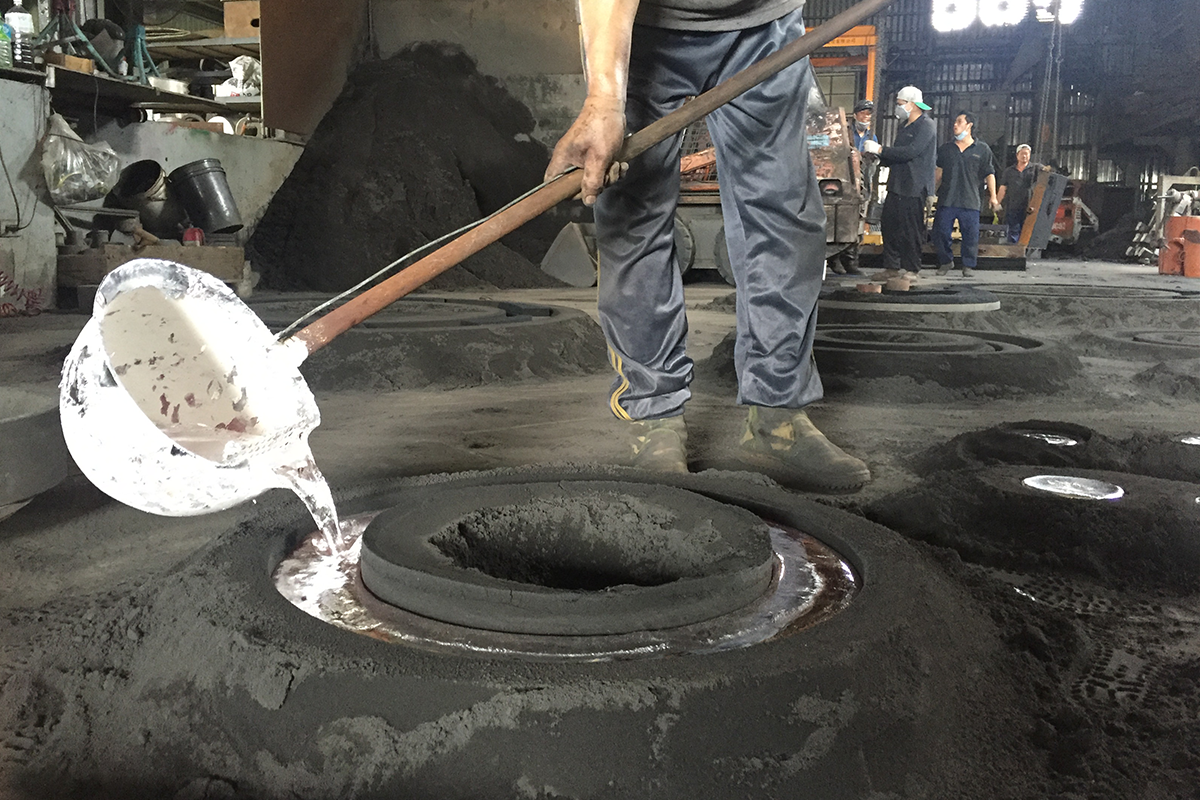 The comparison of casting methods reveals distinctive advantages and applications throughout different strategies - Aluminum Foundry. Sand spreading is usually commemorated for its adaptability and cost-effectiveness, while die casting is acknowledged for its efficiency and precision in generating high volumes. Financial investment spreading, formerly talked about, showcases its one-of-a-kind capability to create complex styles, even more stressing the diverse capacities of each technique in Aluminum Foundry procedures
Sand Spreading Advantages
Sand spreading supplies several benefits when contrasted to various other casting approaches, making it a favored selection in numerous production applications. One of the primary benefits is its low cost, as the materials required, such as sand and metal, are inexpensive and readily available. Additionally, sand casting permits better layout flexibility, allowing the manufacturing of complex shapes and huge components that might be challenging to achieve with various other methods. The procedure also fits a vast array of steel alloys, including Aluminum, boosting its versatility. Sand mold and mildews can be conveniently repaired or changed for succeeding casts, making it effective for both big and tiny production runs. Overall, these advantages add to sand spreading's popularity in the Foundry industry.
Pass Away Casting Techniques
Die spreading methods stand out as an extremely effective method for generating steel parts, specifically when contrasted to conventional spreading techniques like sand casting. This procedure includes forcing liquified Aluminum right into a mold and mildew under high pressure, leading to specific measurements and a smooth surface area coating. Unlike sand spreading, which requires extensive completing job, pass away casting lessens post-production handling, boosting overall productivity. Additionally, die casting can accommodate intricate geometries, permitting intricate designs that would be challenging to accomplish via various other approaches. The speed of production is one more advantage; die spreading can create huge quantities of components in a much shorter duration. Overall, the mix of design, efficiency, and accuracy versatility makes die casting a recommended choice in modern-day Aluminum Foundry operations.
Investment Spreading Applications
Financial investment casting, frequently described as lost-wax casting, supplies distinctive advantages over various other casting methods, particularly relative to precision and surface finish. This technique allows for the creation of intricate shapes and fine information that are hard to attain with sand or pass away spreading. Furthermore, investment casting creates elements with exceptional dimensional accuracy, reducing the need for comprehensive machining. Its versatility makes it suitable for numerous sectors, including aerospace, automobile, and clinical devices, where top notch parts are vital. Contrasted to pass away casting, which can be limited by mold and mildew intricacy, investment spreading stands out in generating complex geometries without jeopardizing architectural honesty. Subsequently, the choice of financial investment casting becomes increasingly desirable for applications requiring high efficiency and reliability.
Quality Control in Aluminum Foundry Operations
How can Aluminum foundries ensure the finest in their products? Implementing extensive quality assurance measures is essential. Foundries typically begin by establishing clear specs for the Aluminum alloys made use of, ensuring they fulfill industry requirements. Continuous surveillance during the melting and putting procedures assists recognize any type of discrepancies from preferred chemical compositions.
Furthermore, aesthetic examinations and non-destructive screening approaches, such as ultrasonic or X-ray evaluations, are frequently employed to discover inner defects or inconsistencies in spreadings. Additionally, statistical process control methods track production information, allowing for early identification of possible issues.
Routine training and certification of workers in quality control techniques are vital for keeping high standards. Ultimately, carrying out comments loops from consumers can assist shops refine their procedures and enhance product high quality. By sticking to these practices, Aluminum foundries can constantly supply top notch products that go beyond or fulfill consumer expectations.
Future Fads in Aluminum Spreading Modern Technology
Innovations in Aluminum spreading innovation are poised to reshape the market landscape, building upon established quality control techniques. Advancements such as additive manufacturing and clever Foundry options are emerging, enabling boosted style flexibility and lowered waste. The assimilation of artificial intelligence and machine understanding in procedure tracking permits for real-time changes, boosting effectiveness and product high quality.
Sustainability remains a crucial focus, with an emphasis on reusing scrap Aluminum and decreasing energy usage. Advanced alloy formulations are being established to optimize performance while minimizing ecological impact. The adoption of automated systems, including robotics for managing and pouring, assures to improve work environment security and precision.
Additionally, digital twins are obtaining grip, enabling for online simulations that assist in better decision-making and predictive upkeep. As these trends advance, they will likely create a much more reliable, lasting, and technologically advanced Aluminum spreading market, establishing new requirements for top quality and efficiency.
Frequently Asked Concerns
What Safety Procedures Should Be Absorbed Aluminum Foundry Procedures?
In Aluminum Foundry procedures, necessary precaution consist of individual protective devices, proper air flow, normal training, threat evaluations, emergency preparedness, and adherence to methods to reduce threats connected with molten steel and heavy equipment.
How Is Recycled Aluminum Utilized in Foundry Processes?
Recycled Aluminum is commonly used in Foundry procedures to lower environmental effect and production costs. It undertakes melting and refining, allowing suppliers to create premium products while saving energy and minimizing waste in the Aluminum lifecycle.
What Equipment Is Important for Aluminum Spreading?
Necessary devices for Aluminum casting consists of furnaces for melting, molds for shaping, pouring ladles, cooling down systems, and ending up devices. Each part plays an essential role in making sure the effectiveness and top quality of the spreading process.
Exactly How Do Ecological Regulations Impact Aluminum Foundries?
Environmental guidelines substantially impact Aluminum foundries by imposing limitations on discharges and waste monitoring. Conformity calls for investment in cleaner technologies, which can boost functional prices however inevitably advertises sustainability and lowers the environmental impact of the market.

What Are Usual Problems in Aluminum Castings and Their Solutions?
Usual problems in Aluminum spreadings include porosity, surface area, and shrinkage imperfections. Solutions include maximizing melt quality, managing air conditioning rates, and utilizing correct mold style, Aluminum Foundry Wisconsin making certain far better stability and performance of the last cast items.
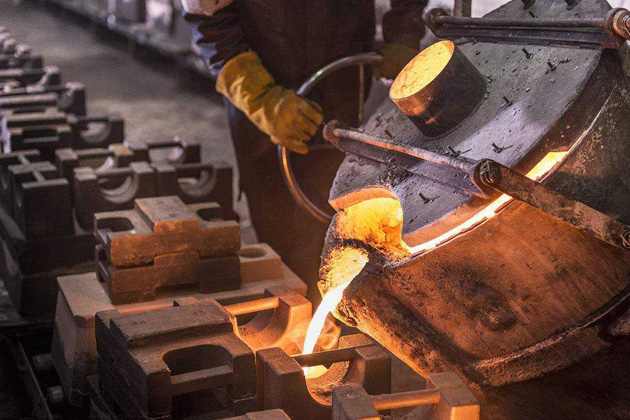 Significant techniques consist of die casting, which utilizes high-pressure to inject Aluminum right into mold and mildews for precision parts, and gravity spreading, where liquified Aluminum is put into mold and mildews under the influence of gravity, allowing for larger, less complicated forms. While die spreading is commonly compared to sand spreading, it supplies distinct advantages and restrictions that make it ideal for specific applications in the Aluminum Foundry industry. Sand casting is usually celebrated for its flexibility and cost-effectiveness, while die casting is acknowledged for its performance and accuracy in generating high quantities. Die casting techniques stand out as an extremely reliable method for producing metal parts, particularly when contrasted to typical spreading methods like sand casting. Contrasted to die casting, which can be restricted by mold and mildew complexity, financial investment spreading succeeds in generating intricate geometries without compromising structural integrity.